ESTRO course report
26-28 March 2026, Rome, Italy
- Senior Clinician Perspective
I had the pleasure of attending this course, which was the first of its kind. It was a wonderful learning experience that provided a multidisciplinary team of teachers. As participants, we were fortunate to have well-known radiation oncologists who were specialists in neuro-oncology, a neuroradiologist, a neurosurgeon specialising in radiation oncology, as well as radiation physicists and radiotherapists.
There were approximately 80 participants from all over the world: radiation oncologists (the largest group), physicists, and radiotherapists, with the aim of learning more about the practice of stereotactic radiotherapy and radiosurgery for central nervous system (CNS) lesions.
The course was very well-organised, from the venue (a hospital on the Tiberina island with a very nice radiation oncology department) and social event to the quality and structure of the lectures. This course covered all aspects of interest, including imaging, treatment planning, treatment delivery and re-irradiation. The course also offered attendees the opportunity to discuss actual cases and how they were managed by seasoned clinicians. They encouraged us to openly ask questions and, in the process, create a positive educational environment. Every question was answered by the teachers without prejudice, citing up-to-date evidence as well as giving their personal views on each topic that was covered. The teachers were very friendly, and they encouraged us to contact them in the future with clinical problems.
I have been practising clinical radiation therapy for the past 41 years (but radiosurgery only for the past two years), and this course has supported me in strengthening my knowledge on stereotactic radiotherapy and radiosurgery for the CNS. I think among other gains, I will be more competent in discerning when I should use stereotactic fractionated radiotherapy vs. radiosurgery for these lesions. I sincerely enjoyed this learning experience and will be highly recommending this course to my colleagues. I am already looking forward to attending the next course in 2027. Once again, many thanks to the superb teachers and to ESTRO for organising this course.
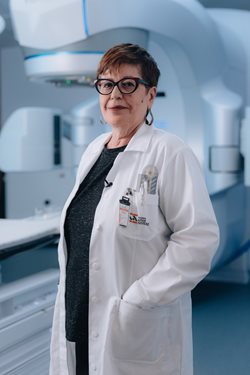
Despoina Misailidou, M.D., Ph.D.
Radiation oncologist diplomate of the American Board of Radiology
Head of International Centre of Stereotactic Radiation Surgery & Radiation Therapy,
St Luke’s Hospital, Thessaloniki, Greece
E-mail: dmisail03@gmail.com
I am a resident physician in radiation oncology at the University Hospital Zurich with a particular interest in neuro-oncology. Brain metastases and skull base lesions are not only part of my daily clinical work, but they are also a main topic of my research. It was therefore an easy decision for me to attend this ESTRO course. This was the second ESTRO teaching course I have attended, and since I’d had a very good experience at the first one a while back, I came in with high expectations.
What I hoped to gain most from this course was to look beyond my own institution, hear how colleagues from across Europe approach the same complex questions, and revisit current treatment standards in a structured setting, while also getting into the nooks and crannies of where and how these standards are currently being challenged or expanded on. Quite a tall order, I know – but the course still managed to exceed my expectations: it offered a rich mix of didactic sessions and interactive formats that created exactly the kind of reflective space I was hoping to find.
Two aspects of the course stood out to me as particularly valuable.
The first was the interdisciplinary breadth of the faculty and the content. As a physician, my daily interactions tend to centre on clinical decision-making, while, despite being aware of them, not always fully immersing myself in the practical and technical aspects and challenges that arise in other disciplines that plan and apply the treatments we prescribe. The contributions from radiation therapists and medical physicists opened up new perspectives on these aspects. Listening to their priorities and problem-solving approaches was a genuine enrichment.
The second highlight was the discussion of teaching cases and radiotherapy plans submitted by different institutions for collective review. These were not straightforward scenarios – they were complex and challenging, precisely the type of cases that reveal how much room there still is for interpretation and institutional variation, even within well-established treatment guidelines. The dialogue that emerged from these plan reviews was, for me, among the most memorable parts of the course.
I would wholeheartedly recommend this course to any clinician, physicist, or radiation therapist who regularly encounters and treats patients with brain metastases or skull base tumours, regardless of experience level. It offers a solid grounding on the subjects it discusses (including a helpful refresher on neuro-anatomy!) and familiarises the participants with current guidelines while still offering a deep dive into the crevices of its more challenging topics and leaving a lot of room for interdisciplinary and interdepartmental discussion.
Finally, even though this is adjacent to the course rather than integral to it, I cannot close without mentioning the extraordinary setting in which it took place, the Ospedale Isola Tiberina on the Tiber Island in Rome. There are not many places in the world where you can discuss the latest advances in stereotactic radiosurgery with 400-year-old stonework as your backdrop, and ancient Roman ruins underneath, right next to the Linacs. Truly an unforgettable experience.
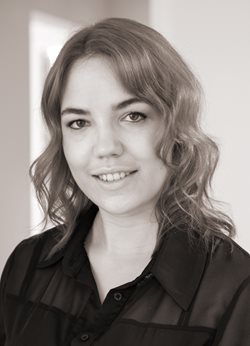
Lena Kretzschmar, MD
Resident physician
Department of Radiation Oncology
University Hospital Zurich
Zurich, Switzerland
E-mail: Lena.Kretzschmar@usz.ch