19 - 22 April 2026 Lisbon, Portugal
Course report
Course director: Søren M. Bentzen, Biostatistician & Radiation Biologist, University of Maryland School of Medicine, Maryland (USA)
My name is Frederik Crop, a medical physicist involved in both clinical and research projects at the Centre Oscar Lambret in Lille, France.
The course “Quantitative methods in radiation oncology” caught my attention two years ago as I was interested in expanding my knowledge and understanding of trials and dose-response modelling. More specifically, I wanted to fully comprehend the methodology so I might apply it to projects and research.
The main strength of the course lies in its teachers: each possessing extensive knowledge of their respective topics, combined with excellent pedagogic skills. Even in certain topics I was more familiar with, I learned a lot and received a very efficient update to my knowledge. The interactive teaching format encouraged thinking and interesting interactions with both the teachers and the other participants. The teachers conveyed not only their broad scientific experience, but also the importance of learning from past errors: nothing is more instructive than avoiding the repetition of previous mistake
Another key aspect of the course was gaining an understanding of the intricacies involved in clinical trials and research in general, for which a quote by R.A. Fisher is particularly fitting:
“To consult the statistician after an experiment is finished is often merely to ask him to conduct a post mortem examination. He can perhaps say what the experiment died of.”
When it comes to trials, or research in general, the course makes it very clear that this notion can be extended to the entire multidisciplinary team, which is required in (radiation) oncology. This was demonstrated particularly well during interactive group sessions. Finally, the challenges, but especially the pitfalls, in the “chase for the p<0.05 value” were explained very clearly. This critical “look at the data” skill is not only extremely useful for researchers, but also very valuable in clinical work, where it helps one to assess published results with a critical eye. Science, after all, is a meandering process.
In summary: ,the perfect course to sharpen your research skills and critical thinking.
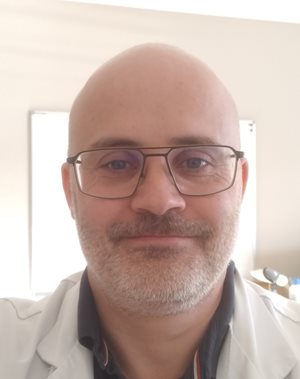
Frederik Crop, PhD
Medical physicist
Centre Oscar Lambret
Lille, France
F-Crop@o-lambret.fr