The European Particle Therapy Network (EPTN), established in 2015 and designated a task force of ESTRO in 2017, was created in response to the growing number of particle therapy centres across Europe. In 2025, the EPTN proudly celebrated its tenth anniversary and hosted its eleventh annual meeting on 22 October in Prague, Czech Republic.
Ahead of the meeting, a dedicated workshop titled Hypofractionation in Proton Therapy: From Radiobiology to the Clinic was held on 21 October at the same venue. This workshop was set up as a joint effort between the EPTN work packages (WP)1 (clinical evidence) and 6 (radiobiology) and the EPTN adaptive task force. The workshop was organised as a comprehensive event that featured breakout sessions focusing on both radiobiological and clinical aspects. The workshop was intended to identify essential preclinical data for clinical adoption of hypofractionation in proton therapy, explore its clinical, technical, and organisational implementation, and outline a coordinated European strategy to support related clinical trials and broaden its adoption. Thus, notably, this year’s workshop was organised slightly differently from those of previous years; it took the format of a collaborative event directly organised by three EPTN groups, to help to bridge clinical and radiobiological perspectives in proton therapy.
The EPTN is happy to observe strong, continued and sustained engagement across its network. The meeting welcomed 72 registrations from 15 countries, primarily within Europe, highlighting the growing reach and collaborative spirit within the EPTN. The annual meeting also serves as a platform for the EPTN’s currently eight WPs to present their progress and initiatives undertaken in the previous year and for the future. This time, these included educational courses, workshops, and the development of guidelines. Furthermore, the adaptive task force, which was established in 2023, also reported on its progress; it is highly active and has contributed to the organisation of two EPTN workshops to date. The EPTN is happy to report on the high activity within its network, its growing number of affiliated experts, and the continued successes of its annual meetings, workshops, and general activities. Finally, we are also very pleased to welcome two new proton therapy centres in Norway, one in Oslo and one in Bergen, bringing the total number of operational centres in Europe to 28.

EPTN-related upcoming events 2025-2026
The EPTN is proud to observe the high number of events and activities that are related to or organised with it. At the meeting, a variety of upcoming events related to the EPTN were presented to the network. These events were:
- ESTRO School Hybrid Teaching Course in Particle Therapy: 14 October - 29 November 2025, Heidelberg, Germany.
- THINK HADROM 2025: Sinonasal Cancers: 28 November 2025, Pavia, Italy.
- FLASH Radiotherapy and Particle Therapy course: 10-12 December 2025, Prague, Czech Republic.
- PSI Winter School 2026: 19-23 January, Villigen, Switzerland.
- ESTRO School - Particle Therapy course: 15-19 March 2026, Malaga, Spain.
- ESTRO Congress 2026: 15-19 May: Stockholm, Sweden.
- Particle Therapy Co-Operative Group (PTCOG) 64: 8-13 June 2026: Caen-Deauville, France.
EPTN publications since the last annual meeting
Lauwens L, Ribeiro MF, Zegers CML, Høyer M, Alapetite C, Blomstrand M, Calugaru V, Di Perri D, Iannalfi A, Lütgendorf-Caucig C, Paulsen F, Postma AA, Romero AM, Timmermann B, Troost EGC, van der Weide HL, Whitfield GA, Harrabi S, Lambrecht M, Eekers DBP. Systematic review of MRI alterations in the brain following proton and photon radiation therapy: Towards a uniform European Particle Therapy Network (EPTN) definition. Radiother Oncol. 2025;208:110936. doi: 10.1016/j.radonc.2025.110936.
Placidi L, Thariat J, Dasu A, Stock M, Toma-Dasu I, Trnková P, Thiele J, Safwat AA, Fiore MR, Vitek P, Pica A, Widesott L, Hoffmann A, Bolsi A. Patterns of practice of image guided particle therapy for extremity tumours: A site specific multi-institutional survey of European particle therapy network. Phys Med. 2025;137:105094. doi: 10.1016/j.ejmp.2025.105094.
Lühr A, Wagenaar D, Eekers DBP, Glimelius L, Habraken SJM, Harrabi S, Kramer MCA, Mackay RI, Vaniqui A, Dasu A, Weber DC. Recommendations for reporting and evaluating proton therapy beyond dose and constant relative biological effectiveness. Phys Imaging Radiat Oncol. 2024 Dec 25;33:100692. doi:10.1016/j.phro.2024.100692.
Report from the Prague Proton Centre
By Pavel Vitek
The Proton Therapy Centre Czech (PTCC), founded in 2012, is the first particle radiotherapy facility in Central and Eastern Europe, and is a unique commercial particle therapy centre there. It is highly effective and provides treatment for a wide spectrum of diagnoses; if any advantage (dosimetry, compliance, quality of life, economy) beyond other possible treatments may be anticipated. It is open to collaboration with other centres in Europe, and can offer certain experiences for exchange.
It provides services predominantly for the population of the Czech Republic (10.5 million inhabitants), but there are a few foreign patients. Treatment costs are fully covered within the health insurance system. Foreign patients comprise only a minority of clients.
The technical equipment is based on IBA s.a. technology - one cyclotron, Proteus 235, and four treatment rooms, three gantries and one fixed beam, supported by imaging technology – CT, MRI, PET/CT, planning systems and in-room kilovoltage imaging. There is no inpatient department. Pencil beam scanning (PBS) intensity-modulated proton therapy is exclusively employed.
Routine treatment was initiated in December 2012. A total of 1700 patients were treated in 2024; 33,500 fractions were administered in the year (on average, ca. 130 fractions per working day).
Proton radiotherapy is provided for treatment of any diagnosis and any involvement if a clinically significant dosimetric advantage over conventional photon radiotherapy is expected or documented. The distribution of treated diagnoses is at least similar to what is referred to and published in PTCOG statistics. Prostate treatment comprises ca. 33% of administered fractions.
Despite the relatively high number of treated patients, the availability of particle (proton) radiotherapy remains good in a small and homogeneously populated area of the Czech Republic. Proton radiotherapy is a significant and centralised modality in the system of anticancer treatment in the Czech Republic. This position of the PTCC reflects a kind of obligation for further development.
The position of proton radiotherapy in the Czech Republic is in concert with the mission and vision of EPTN, aimed at collaboration and integration in the framework of ESTRO. The PTCC is ready to become a unit able to contribute to particular WPs, e.g. WP1, WP4, WP5. The PTCC may offer results, publication contributions and selected valuable anonymised data. Various results documenting qualities of proton radiotherapy have been published recently, e.g. from the field of dosimetry or clinical results of prostate cancer (ultrahypofractionated regimen), head-and-neck cancers, malignant lymphomas, anal cancer, rare tumours and others.
A European prospective data registry is under development (Grau C. et al. Radiother Oncol. 2024 Jul;196:110293). The PTCC may be a significant contributor after the resolution of procedural issues (the General Data Protection Regulation, institutional policy, and patient consent issues).
The PTCC is a commercial centre, not a supported research institution. There is no funding or grant support. Thus, it may be complicated to participate in multicentre trials or to conduct investigator-initiated academic trials.
However, there is continuous development of preclinical and clinical processes that reflect new trends in particle therapy. The PTCC “mainstream” results of the currently changing paradigm of radiotherapy. It is reflected in several core issues, which are listed below.
- Hypofractionation. Hypofractionated regimens have become a local standard for at least 10 basic diagnoses except haematological malignancies.
- Immune system versus radiotherapy. This experimental issue demands new parameters of data collection (effective dose to immune cells, estimated dose of radiation to immune cells, immunocompetent cell timelines, low integral dose volumes, time factors). It is also a compelling issue for cooperation in a prospective data registry.
- De-escalation and volume reductions regarding immune system doses.
- Spatially fractionated radiotherapy.
- Role of hyperthermia.
- Health economics – data analyses aimed at the real costs of cancer treatment encompassing particle radiotherapy.
Collaborative EU-projects
JANE2 Network of Expertise
By Ester Orlandi
JANE-2: A New Joint Action on European Networks of Expertise (NoE’s) in Cancer
The JANE-2 Joint Action (2024-2028) represents a significant new phase in European collaboration against cancer, building on the foundational "Green Paper" that was developed by the preceding JANE-1 project (2022-2024). Coordinated by Fondazione IRCCS Istituto Nazionale dei Tumori (INT, Italy), this ambitious four-year, €40.4 million initiative involves 121 organisations from 29 countries. Its primary mission is to launch seven new "Networks of Expertise" (NoEs), which are designed to provide critical services to the European cancer community. These services include the development of clinical guidelines, the creation of new healthcare models, raising public awareness and fostering research. The seven NoEs cover complex cancers, palliative care, survivorship, personalised prevention, omic technologies, high-tech medical resources, and young adults with cancer. They integrate stakeholders from healthcare, scientific societies, and patient advocacy groups.
The NoE on High-Tech Medical Resources and the Innovative Radiotherapies Domain
Of particular relevance to the EPTN is the NoE on "High-Tech Medical Resources", co-led by Unicancer (France) and Region Zealand (Denmark). This network is committed to making access to highly specialised, innovative technologies, which are often expensive and rare, more equitable for all EU citizens. Within this NoE, one domain is focused on innovative radiotherapy, led by the National Centre for Oncological Hadrontherapy (CNAO, Italy) and Centre Léon Bérard (France), with participation from 17 countries and 28 institutions. The domain aims to promote the integration of innovative radiotherapy, address adoption barriers, support training and develop a roadmap for timely implementation, with active involvement of patient associations (PAs) to enhance awareness and acceptance of radiotherapy innovations. The practical implementation of this domain's goals is managed by four "Operational Task Groups", which are led by task leaders under the supervision of the Steering Committee. This committee, which is responsible for strategic direction, is composed of domain leaders, national representatives, and representatives from ESTRO, the European Organisation for Nuclear Research CERN, and PAs. The task groups will produce key deliverables, including, but not limited to, an "Information tool for patients" (M18), a "Compilation paper on emerging uses of hi-tech innovation and strategies for access across Europe" (M26) and a "Paper on a vision for a future roadmap" (M44) intended to establish a "virtuous cycle of radiotherapy innovation" focused on technology transfer.
Conclusion
The JANE-2 innovative radiotherapies domain is at the start of its four-year mandate to enhance the integration of advanced radiotherapy interventions across Europe. The immediate priority is to establish a robust evidence base to guide this effort. This foundational work is being driven by a multi-stakeholder consultation, including a comprehensive survey for PAs and two parallel surveys for clinicians and technology developers. The insights gathered from this comprehensive analysis will be instrumental in identifying critical barriers to access, shaping new educational programmes and co-creating patient-centric informational tools. This initial phase is essential if we are to ensure that all future actions are targeted and effective, and accelerate the equitable, value-based adoption of innovative radiotherapy in Europe.
RAPTOR
By Francesca Albertini
The Real-Time Adaptive Particle Therapy Of Cancer (RAPTOR) training initiative was the first to be dedicated to adaptive particle therapy (APT). It paired a coordinated, multicentre research programme with a structured doctoral curriculum across Europe. The network comprised 15 PhD projects (early-stage researchers, ESRs) across 13 beneficiaries and six partner organisations, coordinated by PSI (F. Albertini) with WP leads: Ludwig-Maximilians-Universität München (K. Parodi—WP1: Training), Polytechnic University of Milan (C. Paganelli—WP2: Imaging for adaptation), Aarhus University (S. Korreman—WP3: Intervention), Delft University of Technology/OncoRay (C. Richter—WP4: Verification), and COSYLAB (K. Anderle—WP5: Dissemination). The project ran from March 2021 to August 2025 with €4 million in funding from the EU-Marie Sklodowska-Curie Actions (MSCA) programme.
An important milestone was the first clinical delivery of an online APT workflow at PSI (Oct 2023). This system utilised some of the tools that had been developed within RAPTOR, so demonstrating feasibility within standard treatment slots (Phys. Med. Biol., DOI: 10.1088/1361-6560/ad7cbd). By the project’s end, all deliverables and milestones had been completed, more than 40 peer-reviewed manuscripts had been published, and three training schools had been delivered (culminating in the October 2024 final conference in Dresden, Germany). About 3% of ESRs have successfully completed their PhDs; the remainder are on track to defend in 2026.
RAPTOR maintained an active, multi-channel presence led by WP5: 150+ social media posts (primarily on LinkedIn) amplified publications, milestones, and ESR spotlights; there was a video series; and an open e-learning platform hosted recordings from the RAPTOR Schools and invited lecturers.
Besides, the three scientific WPs delivered the following key outcomes.
WP2 — Imaging and artificial intelligence for adaptation. Delivered clinically usable cone beam computer tomography (CBCT)‑to‑CT/sCT pipelines and validated image‑guided segmentation workflows on head‑and‑neck and pelvic cohorts; introduced a probabilistic dose‑accumulation framework that explicitly models deformable image registration (DIR); released trained networks, reference phantoms/CTs, and documentation for reproducibility.
WP3 — Online planning and delivery. Implemented a re‑optimisation and plan quality assurance (QA) system that was accelerated by a graphics processing unit and produced deliverable replans within the treatment slot; demonstrated 4D dose reconstruction for motion/interplay assessment; and derived trigger rules to select triggered APT vs. daily online APT (OAPT).
WP4 — Verification and QA. Integrated prompt‑gamma imaging and logfile‑based dose QA into the clinical pilot, defining action levels and decision rules; developed a modular 3D‑printed end‑to‑end phantom for multi‑centre validation and training.
RAPTOR built a recognised, sustainable European community in APT. ESR secondments catalysed >20 peer-reviewed joint manuscripts; >40 open-access outputs; and a strong conference presence (80+ abstracts; 72% of contributions were oral presentations). Shared tools (e.g., sCT networks, DIR-uncertainty models, phantom CT datasets) and protocols are available via publications or on request, enabling rapid reuse and benchmarking. Building on this base, RAPTOR leaves an expert, well-connected cohort and a framework for sustained collaboration (RAPTORplus, funded by the EU-MSCA), to drive automatic, robust adaptive workflows into routine clinical practice.
RAPTOR+
By Kristin Stützer and Christian Richter
While the RAPTOR consortium was still running its first MSCA international training network funded under the EU Horizon 2020 Framework Programme, the partners had already started preparations for a follow-up project. In January 2026, the consortium is launching its second initiative to educate talented professionals in the field of APT and to build bridges among all collaborators, i.e. the academic, clinical and industrial sectors. The MSCA doctoral network RAPTORplus, which stands for Right-time Adaptive Particle Therapy Of canceR – personalisation through anatomical PLUS biological adaptation, will be funded with €4.5 million from the EU under the Horizon Europe Framework Programme and €1.1 million from the Swiss State Secretariat for Education, Research and Innovation. In total, 18 doctoral candidates will be hired at 17 European institutions. Kristin Stützer from Helmholtz-Zentrum Dresden - Rossendorf, Germany, and OncoRay will become project coordinator.
The 18 individual research projects were proposed, rated and combined via an open, democratic and transparent process initiated in 2023, which also allowed new partners to join the consortium. Based on the achievements of the concluded international training network, RAPTORplus will pursue three major research objectives within the next four years. These are the:
- efficient implementation of OAPT in Europe in partnership with leading particle therapy centres and industry by researching faster and more cost-effective workflows and how to maximise benefit for specific patients;
- technological advancements for the safe and widespread accessibility of OAPT by improving and incorporating CBCT imaging and treatment verification techniques; and,
- further personalisation of APT through the inclusion of biomarkers and biological models for treatment planning.
The doctoral candidates will work towards facilitating the next step in advancing particle therapy to a highly accurate, more efficient, more accessible and more patient-centred cancer treatment.
The research programme will be accompanied by dedicated training activities, including in-person training events, online training days and numerous individual secondment visits across the network. The doctoral students will also participate in dissemination and communication activities and gain insights into science policy-making, entrepreneurship and innovation management. The aim is to equip top-level holders of PhDs with scientific and transferable skills and competences, enabling them to become future leaders in the field of OAPT in the academic, clinical, private and public sectors. Indirect involvement of parties not yet part of RAPTORplus may become possible by providing secondments or lectures, or perhaps by joining a training camp.
Innovation and Implementation in Particle Therapy
By Mischa Hoogeman
During the annual meeting, initiated by Mischa Hoogeman and Astrid Moerman, a discussion was held on innovation challenges in proton therapy. Using hypofractionation as an example, they highlighted how proton therapy struggles to keep pace with photon radiotherapy in the adoption of hypofractionated treatments. In photon therapy, recent advances, such as MR-guided systems, widespread access to online adaptive workflows, and other high-precision techniques, have enabled the use of hypofractionation across many treatment sites. As a result, clinicians and patients may increasingly favour treatment with fewer fractions, which could reduce the attractiveness of conventionally fractionated proton therapy.
Proton therapy faces a slower innovation cycle, partly due to the longer lifetime of proton equipment and the smaller market size compared with photon linear accelerators. This makes the field vulnerable to the so-called “Valley of Death,” in which promising concepts and research outcomes fail to transition into clinical practice. Such stagnation could ultimately jeopardise reimbursement and limit patient access to proton therapy.
The discussion during the annual meeting acknowledged these risks and explored potential actions, including organising workshops to share experiences and best practices on the implementation of innovations developed in-house and initiation of conversations with vendors. As a next step, a concrete action plan will be drafted and discussed with the EPTN leadership.
Report from the EPTN Adaptive Task Force
By Francesca Albertini, Rita Simoes & Pieter Populaire
The EPTN adaptive task force (launched 2023; cross-WP, multidisciplinary, and cross-modality) continued structured work across five ongoing tasks.
Task 1 — Terminology for adaptive particle therapy (coordinated by P. Populaire, R. Simoes and F. Albertini). A harmonised terminology set was completed and submitted to the International Journal of Particle Therapy to standardise definitions across rationale, timing, and timescale of adaptation. The figure below summarises the used classification.

Task 2 — Strengths, weaknesses, opportunities and threats analysis of online adaptive particle therapy (coordinated by L. Nenoff and P. Trnkova)
No major technology threats were found, so a safe, feasible, large-scale clinical rollout was supported, but there were minor threats in added time/costs and delineation consistency. Key weaknesses include CBCT image quality and limited commercial end-to-end solutions/guidelines/training; key opportunities include higher conformality (potentially fewer side effects), enabling dose-escalation/isotoxic strategies, ultra-hypofractionation, and an expanded role for radiation therapists (RTTs). Crucially, these inputs provide a basis for prioritisation, indicating which tasks the EPTN adaptive task force should work on next (e.g., QA/commissioning guidance, competence matrix, and imaging requirements). Manuscript submitted to the Red Journal. The image below summarises the outcome.

Results of the SWOT analysis for OAPT. Different categories are marked with different colours.
Task 3 — QA and commissioning recommendations (coordinated by L. Placidi and K. Czerska) ESTRO guidelines committee governance has been secured; external reviewers have been appointed. The workflow has been divided into discrete steps with requirements and QA expectations drafted for each step. A broad review with an extended group is planned, targeting mid-2026 for consensus guidance.
Task 4 — Competence matrix for OAPT (coordinated by E. van Weerd, C. Votta and R. Simoes)
A 24-member group (five medical physicists, three radiation oncologists and 16 RTTs from 11 countries) with experience in photons and protons) kicked off on 14 July 2025. Subgroups are mapping workflow steps to knowledge, skills, and attitudes, and translating these into role-specific competencies to enable an RTT-led workflow.
Task 5 — Imaging guidelines for adaptive workflows. A joint WP4/WP5 workshop (University College London, 23 Sept 2025; ~40 participants) was held to converge on guidelines to accept CBCT for dose calculation in OAPT workflows. A questionnaire (coordinated by L. Nenoff, P. Pisciotta, J. Jacobs, E. Hermanová & P. Trnková) was distributed to all EU particle therapy centres. Participants converged on using the “plan dose” as the most relevant parameter for accepting CBCT-based dose calculation. Next step: develop and circulate Delphi consensus statements.
Update on the PROTECT trial
By Hanna R. Mortensen & Cai Grau
The PROTECT randomised trial, which is examining proton versus photon therapy in trimodality treatment of oesophageal cancer, is set up to generate evidence for the emerging use of proton therapy in a collaboration with EU-IHI and the industry. Lately, however, perioperative chemotherapy using the FLOT regimen (fluorouracil, leucovorin, oxaliplatin, and docetaxel) has become the new standard of care for esophageal cancer and gastroesophageal junction adenocarcinomas based on the ESOPEC study. Due to this, there has been a significant change in the number of patients eligible for neoadjuvant chemoradiotherapy, and therefore, the PROTECT study has been changed to include patients treated with definitive chemoradiation as well. The change is based on the expectation that a dosimetric reduction in radiation dose to the heart and lungs will be beneficial to definitive patients, too. To cover the new patient cohort, the total toxicity burden used in the study by Lin et al. has been chosen as the new primary endpoint.
Recruitment is proceeding, with more than 75 patients included already. Established WPs (radiotherapy and surgery QA, public and patient involvement, health economics, translational studies, and novel trial methodologies) will continue the work to generate high-quality scientific data on proton versus photon therapy for oesophageal cancer.
Workshop on Hypofractionation in Proton Therapy: From Radiobiology to the Clinic
Daniela Alterio, Hans Langendijk, Christian Karger, Brita Singers Sørensen, & Armin Lühr
The EPTN hypofractionation working group was established in October 2024 within the context of WP1 (clinical evidence), coordinated by Hans Langendijk and Karin Haustermans. The working group initially comprised a coordinator (Daniela Alterio, MD) and two core members (Christian Karger, PhD, and Markus Stocks, PhD).
The first step was to launch a survey of all European particle therapy facilities to explore for what cases (indications) and how (fractionation) hypofractionation was currently used, either in daily clinical practice or in ongoing clinical trials.
Subsequently, in agreement with the EPTN representatives, it was proposed that a workshop be organised on hypofractionation to review the current state of the art, identify shared interests, and define potential collaborative projects. The workshop agenda was set in collaboration with WP6 (radiobiology), coordinated by Brita Sørensen (radiobiologist), and Armin Lühr (physicist), aiming to provide a transversal clinical and radiobiological overview of the topic. The workshop was held on 21 October 2025 in Prague, Czech Republic, and the main results were presented the day after, during the plenary session of the EPTN annual meeting.
The workshop was structured in two parts:
- Upfront presentations covered several aspects, including clinics (literature review, rationale for implementing hypofractionation in clinical practice, limitations, and future perspectives), technological assessment (adaptations required for robust and safe application of hypofractionation in daily clinical practice), radiobiology (models to be considered in dose conversion), and research purposes (types of research and how to develop them). The results of the European survey were also presented.
- Discussion in two separate groups (clinics and radiobiology). The meeting room was divided into two areas to facilitate internal discussion aimed at summarising the data presented in previous sessions and setting proposals for future activities.
In a final plenary session, the projects to be carried forward were explained to all participants in the meeting.
Five main projects emerged from the discussion:
- Presentation of the European survey results through a scientific publication. Data from the online questionnaires will be developed and structured in the form of a manuscript. This will help to provide the background and framework for defining future clinical and research activities.
- Definition of recommendations (including clinical indications, technical requirements, radiobiological considerations, and results collection) for selected diseases. This project will involve multiple professional figures (medical doctors, physicists, RTTs, radiobiologists), and the aim is to provide a comprehensive overview of all aspects regarding the use of hypofractionation in a defined clinical setting.
- Ongoing study on nasopharyngeal cancer patients. Professor Langendijk presented the general concepts of a study currently under development in his centre. This task will explore the possibility of expanding the research to a multicentre setting. Feasibility (in terms of patient numbers, costs, and ethical commitments) will be assessed.
- Enrolling patients treated with hypofractionated proton therapy in the European registry. This project will be developed through collaboration between WP1 and WP8 (data registry infrastructure).
- Radiobiology. When moving from standard to hypofractionation, the impact of radiobiological effect is treated as uncertainty. The role of normal tissue volume, linear energy transfer/relative biological effectiveness, immune-response, other dynamic processes, dose rate and tolerance to re-irradiation have been focused as subjects that will be addressed in future analysis.
The development of the projects mentioned above (including involved personnel, milestones, and timing) will be defined over the coming months through dedicated online meetings. The progress of each project will be presented during future EPTN meetings.
Overall, the workshop highlighted that hypofractionated schedules were already used by several particle therapy centres in Europe. The topic attracted considerable interest, not only from radiobiological and clinical perspectives but also in terms of patient compliance and ways to improve the cost-effectiveness of particle therapy. However, several aspects still need further investigation, with the final goal of applying hypofractionated schedules in a homogeneous, reliable, and high-quality way.
Concluding Remarks
We are pleased to witness the continued growth and vitality of activities within and surrounding the EPTN. The rising number of affiliated experts, the sustained participation in EPTN events, and enthusiastic feedback from our annual meeting and workshops reaffirm EPTN’s role as an impactful network for collaboration, research, and dialogue in the field of particle therapy.
As we celebrate and reflect on the milestone of its tenth anniversary, we take pride in the progress achieved over the past decade, defined by scientific advancements, partnerships, and a commitment shared to promote proton therapy across Europe. This year not only marks a significant milestone in the story of the EPTN, but as a springboard for future growth, innovation, and deepened engagement with our community.
We are sincerely grateful for another successful year and warmly thank all who have contributed to the EPTN’s evolution through participation, expertise, and support. Your involvement continues to shape the network’s relevance, impact, and direction.
Looking ahead, we eagerly anticipate the twelfth annual meeting, scheduled for autumn 2026, and another year of meaningful exchanges, collaborations, and advancement within proton therapy.
Thank you once again for being a part of this vibrant and evolving network. See you next year!
Damien Weber, Cai Grau, and Dietmar Georg
Co-chairs of the EPTN
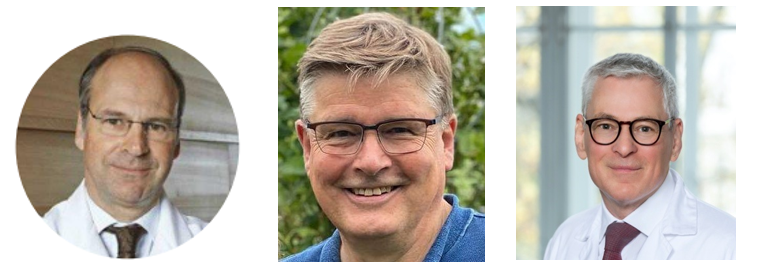
Damien Weber, Switzerland Cai Grau, Denmark Dietmar Georg, Austria
Cai – Aarhus University Hospital, Aarhus, Denmark
Damien – PSI, VIllingen, Switzerland
Dietmar – Medical University of Vienna, Vienna, Austria