An Interview with Brian Liszewski, international liaison person for the Radiation Oncology Safety and Quality Committee (ROSQC)
How is radiation medicine evolving, and what skills will teams need to ensure the safest, highest-quality care for patients in the years ahead? We spoke with Brian Liszewski, international liaison person for ROSQC, who shares key insights on developments, challenges, and the importance of interprofessional collaboration.
Over the past 10 years, what do you see as the most significant developments in quality and safety in radiation medicine?
Honestly, the biggest change has been how quality has become a shared, global conversation instead of something bound by the walls of individual programme. Radiation medicine has always been incredibly safe, but over the past decade, we’ve really opened the doors and started sharing guidance, tools, and lessons learned across borders.
Initiatives like the Canadian Partnership for Quality Radiotherapy (CPQR) are great examples. Their guidance on programmatic quality, person-centred care, and technology is being used internationally. ESTRO’s Re-irradiation and upcoming Cybersecurity recommendations are also shaping global practice. That tells me the world is hungry for this kind of cross-jurisdiction learning. Breaking down the silos between centres and countries has probably been the most transformative quality initiative of the past decade.
With technology advancing rapidly — from IGRT and SGRT to adaptive workflows and AI — what new competencies are needed for teams to ensure consistently safe practice?
We’re at a point where the technology is moving so fast that the competencies almost have to catch up in real time. In Canada, that became clear in the update to our pan-Canadian competency profiles. Advancements such as AI aren’t these “future ideas” anymore. It’s now become an integrated part of what we expect people entering and in practice to understand.
But knowing how to use AI or adaptive tools isn’t enough. Teams need to understand the principles behind them: data quality, bias, validation, failure modes, and responsible rollout. That’s where groups like the Canadian Artificial Intelligence and Data in Radiotherapy Alliance (CADRA) come in, helping ensure we’re not just adopting the “shiny new gadgets” but thinking through the implications.
Honestly, the technology isn’t the hard part. The real shift is equipping educators, leaders, and teams to teach and govern these tools responsibly. Preparedness is the new competency.
What role does interprofessional collaboration play in strengthening safety culture across radiotherapy and medical imaging departments?
If there’s one thing radiation medicine/medical imaging consistently gets right, it’s collaboration. Our work is so intertwined that nothing really takes off unless every profession is at the table, therapists, technologists, physicists, dosimetrists, oncologists, nurses, everyone. And thankfully, we operate in a relatively flat hierarchy, which means voices aren’t drowned out by job titles. That’s where real safety culture comes from.
At a Pan-Canadian level, CPQR has shown how powerful equal representation is. Its strength comes from the fact that every profession has a legitimate voice, and that unified approach carries weight well beyond our borders.
Someone once told me, half-jokingly, “If you want something done right, start with radiation oncology.” I think what they really meant is that we solve problems well because we solve them together.
Looking ahead, what initiatives or opportunities will help professionals further strengthen their expertise in quality and safety?
I think the biggest gains ahead will come from creating spaces where we gather across professions and talk honestly about what’s working and what isn’t. The Canadian Organization of Medical Physicists (COMP) Winter School is a great example. It’s not just a conference, it’s a conversation. It brings physicists, therapists, oncologists, and medical imaging partners into the same room. This year’s theme looks back at 15 years of developments in radiation medicine and medical imaging, and the format encourages open discussion, case-based learning and exchange across disciplines. Initiatives like this, where we combine technical content with collaborative reflection, are essential to keep raising the bar in quality and safety. That think-tank style environment is incredibly valuable.
And this spirit runs through ESTRO and other societies with educational offerings, guidance, and frameworks. But beyond formal programming, the thing that really strengthens expertise is curiosity. It’s identifying the “pebble in the shoe,” solving it collaboratively, and realizing that solutions in one area often unlock progress in another.
That mindset, staying curious, staying connected, and staying open, is what will keep us moving forward, providing safe and high-quality care for all patients.
Canadian Organization of Medical Physicists (COMP) Winter School 2026, 28–31 January 2026, Ottawa, Canada.
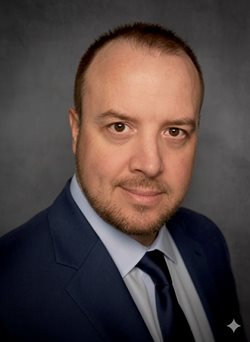
Brian Liszewski M.R.T.(T.), BSc.
International liaison person of the ROSQC
Adviser, Radiation Therapy and Infrastructure Planning
Sector Planning and Capacity Optimisation, Sector Capacity and Performance
Radiation Treatment Programs, Clinical Institutes and Quality Programs
Lecturer, Department of Radiation Oncology, University of Toronto, Canada
brian.liszewski@ontariohealth.ca