ESTRO 2026 Congress report I Early Career Track
The ESTRO 2026 session on telemedicine and global cancer care equity made a single, forceful argument: closing the gap between high-income countries (HICs) and low- and middle-income countries (LMICs) demands simultaneous investment in clinical capability, technological infrastructure, and service organisation.
Dr. Fabio Y. Moraes, MD, PhD (Canada), opened the session by reframing what "closing the gap" actually means. He introduced the Global Cancer Workforce microsimulation model, which modelled 17 cancer types across 200 countries from 1990 to 2050. The findings are striking: diagnosed cancer incidence is projected to rise from 13.6 million cases in 2025 to 19.3 million by 2050, with roughly one in three incident cancers currently dying undiagnosed worldwide (a figure that reaches nearly 70% in western Africa). But Dr. Moraes was equally insistent that expanding machine access, while necessary, is not sufficient. Even where equipment and guidelines coexist, clinical decision-making variability persists. His proposed solution, the Knowledge Decision Support Capability (KDSC) framework, repositions education as infrastructure embedded within care delivery, operationalised through virtual tumour boards with AI-generated guideline summaries, AI-assisted radiotherapy workflows, large language model-guided navigation, and modular microlearning platforms designed for low-bandwidth LMIC environments.
Dr. Laurence Court, PhD (USA), illustrated what scalable technological infrastructure looks like in practice. He opened with the infrastructure reality: fewer than half of patients in LMICs have access to radiotherapy, only one-third of African radiotherapy centres are currently using standard-of-care treatment planning, and closing that gap could save nearly one million lives per year. The Radiation Planning Assistant (RPA), a free, web-based, FDA-cleared tool providing auto-contouring, treatment planning, and quality assurance support, is clinically live in South Africa, where 252 patients have been treated since January 2025, and is expanding in 2026 to Zambia, Indonesia, and Brazil. Retrospective testing at the Ocean Road Cancer Institute in Tanzania showed 97% use-as-is acceptability for cervical cancer plans in just six minutes of review time. Active trials include ARCHERY (AI-based planning in radiotherapy across South Africa, Jordan, Malaysia, and India) and a dedicated study of radiotherapy for cervical cancer in patients living with HIV in South Africa, a population with disproportionate unmet need given the incidence data just presented.
Dr. Sola Adeleke, MRCP, FRCR, PhD (UK), addressed the organisational layer through the first comprehensive global appraisal of acute oncology services (AOS) in LMICs, combining a multinational survey (early data from 160 clinicians across 52 countries) with a Delphi consensus process to define minimum viable AOS standards adapted for resource-limited contexts. With 90-day colorectal cancer emergency mortality at 27.6% in LMICs versus 16.1% in HICs, the absence of organised emergency oncology frameworks is not a marginal gap.
What made this session valuable was not the individual presentations in isolation, each was compelling on its own terms, but the way the speakers covered the same problem from genuinely different angles. Global oncology equity will not be achieved by machines alone, nor by education alone, nor by better emergency triage alone: it will require all three, built together, and this session made that case as clearly as any at ESTRO 2026.
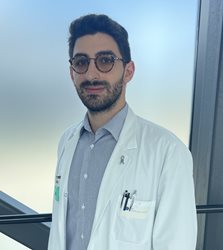
Dr Federico Mastroleo, MD
Radiation Oncologist, PhD student
Division of Radiation Oncology, IEO, European Institute of Oncology, IRCCS, Milan, Italy
Department of Oncology and Hemato-Oncology, University of Milan, Milan, Italy
Department of Radiation Oncology, Mayo Clinic, Rochester, MN, United States
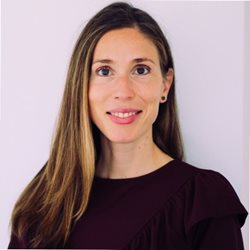
Laia Humbert-Vidan, PhD
Radiotherapy Physicist
Postdoctoral Research Fellow
Radiation Oncology Group
Vall d'Hebron Institute of Oncology (VHIO)
Barcelona, Spain

From left to right: Dr Laia Humbert Vidan, Dr Laurence Court, Dr Fabio Y. Moraes, Dr Sola Adeleke, and Dr Federico Mastroleo.