Best Interdisciplinary Paper Award
ESTRO 2026 Congress Report
The rapid integration of artificial intelligence (AI) into radiation oncology (RO) brings immense promise, but it also raises an urgent question: As AI deployment outpaces clinical evidence, is our healthcare workforce truly ready?
During the recent ESTRO 2026 Congress, the conversation around AI implementation was front and centre. To contribute to this ongoing dialogue, we highlighted findings from our international quantitative assessment of global AI literacy across the RO community. Engaging 760 professionals, we measured exactly where our workforce stands on clinical AI readiness and identified how we might bridge the knowledge gaps in this rapidly moving area.
The Disconnect Between Data Intuition and Model Mechanics
Our assessment revealed an interesting dichotomy in the current workforce's understanding of AI tools. The community scored best in its recognition of data-centric AI concepts such as the importance of high-quality healthcare data and the risks of bias. However, there was a widespread lack of fundamental literacy regarding underlying ‘model mechanics’ and terminology.
A shared technical vocabulary is essential. Without an understanding of model fundamentals, clinical staff cannot effectively distinguish between simple task-based algorithms and complex foundational models when both are marketed simply as ‘AI’. Also, having this baseline knowledge is crucial if people are to accurately describe model failures and advocate for the training and evaluation metrics that best reflect our clinical needs/practice.
Redefining Education for an Agile Era
A highly encouraging finding from the data was that short, targeted workshops were just as effective as longer-form formal degrees or training to gain certificates for rapid AI upskilling. The medical world does not need to wait for the trainee curriculum to undergo multi-year overhauls. Agile, short-form training presents the fastest, most adaptable way to ensure that our clinical teams are ‘AI-ready’ today.
Additionally, our research highlights a massive, unmet demand for structured education. The vast majority of professionals tested are currently relying almost entirely on informal self-study to navigate these complex new tools.
The Case for Shared-Learning Models
Levels of AI knowledge and literacy do not correlate with career stage or clinical experience. Senior consultants with deep clinical-domain knowledge and early-career trainees currently stand on equal ground.
This reality challenges the traditional top-down mentorship paradigm. Instead, departments must embrace flat, shared-learning models in which all clincial staff at all levels must critique and question model outputs together. By pairing the deep clinical knowledge of senior staff with the fresh perspectives of trainees, multidisciplinary teams can evaluate AI outputs and uncover both the strengths and weaknesses of these systems in real time.
Tailoring Training to Professional Roles
That said, our data shows that AI literacy varies significantly by professional role, with medical physicists currently demonstrating the highest overall proficiency scores. This underscores a vital point: that not every role requires the same AI skillset. The competencies needed by a clinical end-user differ vastly from those required by an AI monitor, evaluator, or commissioner. Also, staff with dedicated research components in their roles scored significantly higher, proving the immense value of integrating research and advanced practice pathways into standard clinical roles.
Ultimately, we must determine precisely what knowledge matters for each specific discipline and provide targeted, accessible training. By proactively bridging this knowledge gap, we can ensure that AI’s remarkable promise never outpaces our foundational ability to treat patients safely.
The published paper can be found here:
https://www.sciencedirect.com/science/article/pii/S2405630826001059
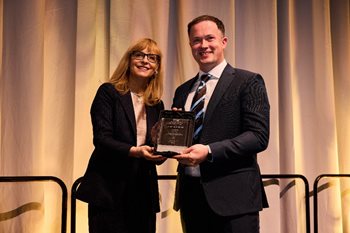
Ciaran Malone receiving the Best Interdisciplinary Paper Award from Barbara Jereczek-Fossa, ESTRO President
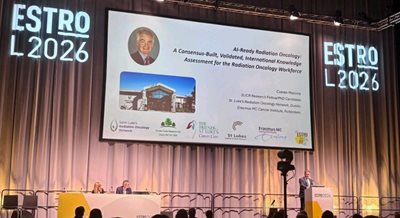
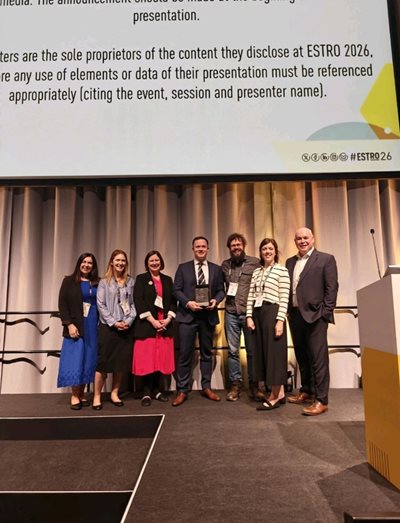
Some of the authors involved in the project, paper and award.
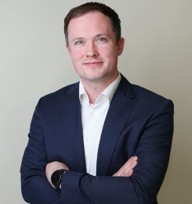
Ciaran Malone
St Luke’s Institute of Cancer Research research fellow & PhD candidate
St. Luke's Radiation Oncology Network, Dublin, Ireland
and Erasmus University Medical Centre, Rotterdam, The Netherlands.
Email: Ciaran.Malone1@gmail.com
Social Media (all authors):
https://www.linkedin.com/in/ciaranmalone/
https://www.linkedin.com/in/dylan-callens
https://www.linkedin.com/in/jill-nicholson-0a27b6368/
https://www.linkedin.com/in/prof-sinead-brennan-1b960384/
https://www.linkedin.com/in/markgooding/
https://www.linkedin.com/in/samantha-ryan-28216861/
https://www.linkedin.com/in/irene-hernandez-giron-143a5961/
https://www.linkedin.com/in/elizabeth-forde-49711681/
https://www.linkedin.com/in/michelle-leech-7a026217/
https://www.linkedin.com/in/pierre-thirion-0ab1b153/
https://www.linkedin.com/in/carlos-cardenas-b38a24125/
https://www.linkedin.com/in/claire-fitzpatrick-a45464226/
https://www.linkedin.com/in/theresa-o-donovan-61a055b4/
https://www.linkedin.com/in/antony-carver-42298b101/
https://www.linkedin.com/in/brendan-mcclean-07a52b123/
https://www.linkedin.com/in/ben-heijmen-42024778/
https://www.linkedin.com/in/gerry-hanna-0331262a/