ESTRO 2026 Congress report
15 May 2026 I Stockholm, Sweden
Course Directors:
- Anna Dubrovska, radiobiologist, Helmholtz-Zentrum Dresden - Rossendorf, Germany
- Laure Marignol, radiobiologist, Trinity College Dublin, Ireland
- Azadeh Abravan, physicist/data scientist, University of Edinburgh / University of Manchester, UK
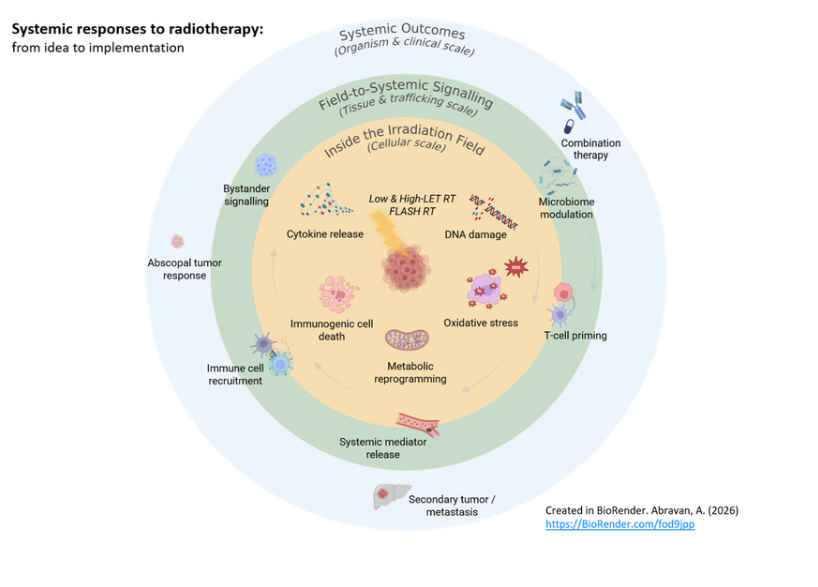
The radiobiology pre-meeting course provided a comprehensive overview of the systemic effects of radiotherapy. It was designed to build a basic understanding of radiation-induced systemic effects and how this knowledge may be translated into improved clinical outcomes. The topic is timely, as it reflects a shift from viewing radiotherapy as a purely local treatment toward recognising its organism-wide biological impact.
Bystander and abscopal effects
The opening session addressed an intriguing systemic phenomenon in radiotherapy, namely the fact that localised irradiation can induce responses outside the treated field. Nicolas Magné used preclinical models to introduce the biological basis of radiation-induced bystander and abscopal effects, highlighting intercellular signalling and immune-mediated mechanisms as drivers of distant responses. His address was complemented by that of Paul Span, who focused on oxidative stress responses. He showed that radiotherapy not only generates reactive oxygen species locally but also induces a measurable systemic antioxidant response in patients. Interestingly, stronger antioxidant responses may correlate with reduced treatment efficacy, suggesting a potential mechanism of resistance and a biomarker for therapy outcome. To bridge preclinical insights with clinical experience, Eric Deutsch presented evidence of the abscopal effect in cancer patients, and emphasised that immune activation underlay these rare but clinically relevant systemic tumour regressions.
Normal tissue toxicity and tumour development
The second session explored systemic consequences of radiotherapy beyond tumour control, including late effects and secondary malignancies. Corinne Abbadie discussed out-of-field radiation effects, emphasising that second cancers often arise outside the irradiated volume due to low-dose exposure. These tumours may develop decades after treatment and may involve mechanisms such as DNA damage, cellular dormancy, and senescence escape.
Anna Dubrovska then highlighted radiation-induced metabolic reprogramming, describing how radiotherapy perturbs tumour metabolism through oxidative stress, mitochondrial dysfunction, and microenvironmental changes. These alterations create metabolic vulnerabilities that could be exploited therapeutically, particularly in combination with metabolic inhibitors.
Continuing this theme, András Piffkó addressed the paradoxical concept of radiation-induced metastasis. While radiation therapy can stimulate anti-tumour immunity, incomplete tumour control or specific inflammatory conditions may promote immune suppression and hence facilitate metastatic progression. This duality underscores the importance of treatment optimisation and systemic context.
Immunomodulation
A central theme of the course was the interplay between radiotherapy and the immune system. Marleen Ansems presented preclinical evidence that local irradiation induces systemic immune changes, including lymphopenia and alterations in populations of circulating immune cells. She emphasised the role of tumour-draining lymph nodes as critical hubs for immune priming and how their inclusion in or exclusion from irradiation fields could influence systemic outcomes. Laure Marignol expanded this perspective by integrating the microbiome into the radiobiological framework. She highlighted how microbial communities shaped both treatment efficacy and toxicity, hence contributing to interpatient variability. Emerging strategies to modulate the microbiome, through diet, antibiotics, or targeted interventions, may help to optimise radiotherapy responses.
In terms of clinical practice, Prof Eric Deutsch discussed the combination of radiotherapy with immunotherapy, and stressed that dose and timing were crucial determinants of synergy. Appropriate scheduling may enhance immune activation while minimising suppressive effects.
Innovative radioimmunotherapy combinations
The fourth session was focused on cutting-edge strategies that could enhance systemic anti-tumour responses through innovative combinations. Alexander Helm explored the integration of charged particle therapy (protons and high-linear-energy-transfer carbon ions) with immunotherapy. These modalities improve the sparing of normal tissue and may enhance immunogenicity by reducing lymphopenia and improving systemic immune responses. Pierre Montay-Gruel introduced FLASH radiotherapy, which is characterised by ultra-high-dose rates. Apart from sparing normal tissue, FLASH appears to modulate immune responses differently from conventional radiotherapy, meaning that FLASH-based radioimmunotherapy offers new treatment possibilities. While promising, clinical implementation is as yet a challenge.
Combination with non-immunotherapy modalities
The final session broadened the discussion to combinations beyond immunotherapy. Kristina Viktorsson reviewed the systemic effects of combining radiotherapy with chemotherapy, targeted therapy, and hormonal therapy, highlighting how these interactions can modify both tumour response and systemic biology. Pelagia Tsoutsou followed up with a focus on radiotherapy and hyperthermia, revisiting this established modality from a modern viewpoint. Hyperthermia enhances radiosensitivity and may induce systemic synergistic effects that may improve treatment outcomes.
Conclusion
The course teachers emphasised a key message: radiotherapy is a systemic therapy with local delivery. We received updates on the many areas of research that are being investigated in the field and the important knowledge gaps that must be filled to enable further clinical applications. Ultimately, the course highlighted the importance of multidisciplinary research and the use of precision approaches to exploit systemic radiotherapy effects fully and to move from biological insight to clinical implementation.
The number of participants (64) was high. They were a diverse group of radiation oncologists, physicists, computational scientists and biologists, reflecting a broad interest in the field. The feedback from course participants was very positive, as reflected by scores and comments in a survey that could be completed after the course. All lectures received a high mean score of between 4 (very good) and 5 (excellent), and the overall impression, including the quality and relevance of the course and suitability of the format, received the same high score. In summary, this was a well-organised course with great lectures.
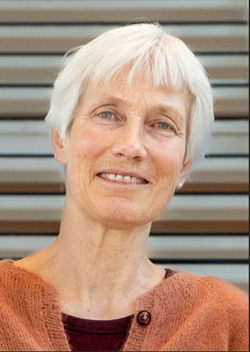
Professor Heidi Lyng
Department of Radiation Biology
Oslo University Hospital
Norway
Email: helyng@ous-hf.no