Artificial intelligence (AI) in clinical settings is expected to offer major technical advances in radiation therapy in the next decade. AI computational approaches are essentially intended to improve the accuracy, efficiency, and personalisation of care, and they are beginning to be used routinely in clinical practice, particularly to contour tumours automatically, generate treatment plans, and to assure quality of medical practices.
AI is also being applied in cognitive research, in attempts to transform complex biological and physical data into more understandable responses. In radiobiology, the main interest of AI developers is to improve and simulate fundamental knowledge by linking the dynamics of molecular neural networks or cellular responses to time or physical parameters of irradiation (dose, fractionation, dose rate, energy, etc.). In this sense, machine learning should offer opportunities to better answer key questions in translational radiation therapy that cannot be answered by experimentation alone. These opportunities include:
- linking biology and microdosimetry by combining Monte Carlo-based simulations of physical doses with early molecular responses to DNA damage or cytogenetic lesions (e.g., dicentric chromosomes and micronuclei) or with other processes involved in cellular radiosensitivity. They also include the improvement of dose–response modelling by refining radiobiological parameters based on dose;
- development of computational twins of tumours within their microenvironments or healthy tissues to describe their molecular and cellular outcomes based on physical radiation parameters (dose, dose rate, energy, etc.).
- simulating tumour control probability (TCP) and normal tissue complication probability (NTCP) based on patient data.
So, AI represents an opportunity to tackle important questions in radiobiology. However, it faces important technical and conceptual limitations that currently constrain its impact and safe deployment in practice. Firstly, most computational models that simulate radiobiological response are observational and correlational, so they cannot by themselves establish causal dose–response or mechanistic relationships. Secondly, biologists must understand that they use minimalist mechanisms so that they can propose computational models that accurately simulate the radiobiological responses of interest. This simplification is difficult due to the great complexity and chronicity of biological processes (tumour heterogeneity, microenvironments, immune responses, DNA repair, paracrine responses…). Furthermore, the application of overly simplified biology leads to approximations and often generates uncertainty. Finally, robust radiobiology models need large, multi‑institutional, well‑annotated datasets that link physical parameters of the irradiation with “omics”, microscopy, functional biology, preclinical and clinical imaging, and cellular or tissular outcomes. These datasets are often fragmented, small, or biased toward specific populations, and therefore their use reduces generalisability and risks inequities. In practice, researchers in laboratories use a variety of experimental approaches (different biological models, physical radiation parameters, follow-up periods, and biological analysis criteria), and this variety complicates the interconnection of data and the translation of predictions into reliable radiobiological recommendations.
Under these conditions, the advent of computational models that simulate the radiobiological responses of tumours or healthy tissues represents an opportunity in the development of personalised radiotherapy. However, research using these models requires rigorous structuring and dedicated experimental studies to understand and to validate the essential biological parameters that should be modelled. This research must be feasible and involve thorough discussion and collaboration between biomathematicians and experimentalists.
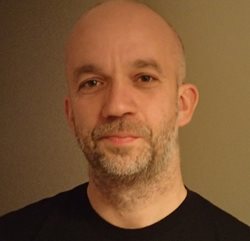
François Paris
Head of team “Plasticity of the Ecosystem of the Tumor after Radiotherapy”
Cancer Research Centre CRCI²NA
Inserm
Nantes University
Nantes, France